The short version
Lesson 1 gave you the four conditions: warm water, stored water, food for the bacteria, and spray. This lesson shows you where each one turns up in a real home. There are five places to look: stored water, water that does not move, deposits, outlets that make spray, and the people who live there.
1. Stored water
A tank or cylinder holds a large volume of water for far longer than any pipe does. If that water is at the wrong temperature, it is the biggest single source of risk in a home.
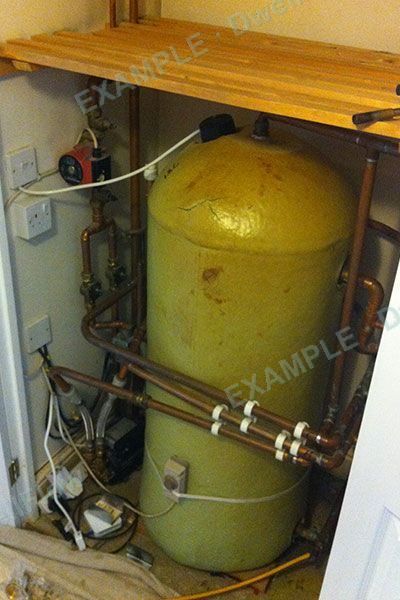
The hot water cylinder
Stored hot water should be at 60 °C or above. HSE lists “setting the temperature of the hot water cylinder (calorifier) to ensure water is stored at 60°C” among its simple control measures. Below that, the cooler water at the bottom of the cylinder can sit inside the range in which legionella grows.
What goes wrong:
- The thermostat has been turned down, often to save energy or to stop the water scalding.
- The heating runs on a timer for too short a time to reach temperature.
- The cylinder is much bigger than the household needs, so the water is heated rarely and sits for days.
- A thermostat or element has failed.
The cold water tank
Stored cold water should stay below 20 °C. A tank in a loft is in the warmest part of the house in summer. HSE’s guidance asks for a tank to be inspected every year. Look for:
| What you see | Why it matters |
|---|---|
| No lid, or a lid that does not fit | Dust, debris, insects, birds and rodents can get in. HSE asks for “a tight-fitting lid”. |
| No insulation, or insulation that has slipped | The tank takes up heat from the loft and the water warms towards 20 °C and beyond. |
| Sediment, rust or slime inside | Deposits feed bacteria. Slime at the water line is biofilm. |
| No screen on the overflow or vent | An open pipe is a way in for insects. |
| A tank far bigger than the household uses | The water turns over slowly, so it stands for longer and warms. |
| A tank that feeds nothing | Left behind when a combi or unvented cylinder was fitted, still connected and full. Its water never moves at all. |
Old tanks. Some older tanks are made of materials that should not be disturbed, asbestos cement among them. If you are not sure what a tank is made of, do not touch it, scrape it or break it. Photograph it and record that the material could not be identified.
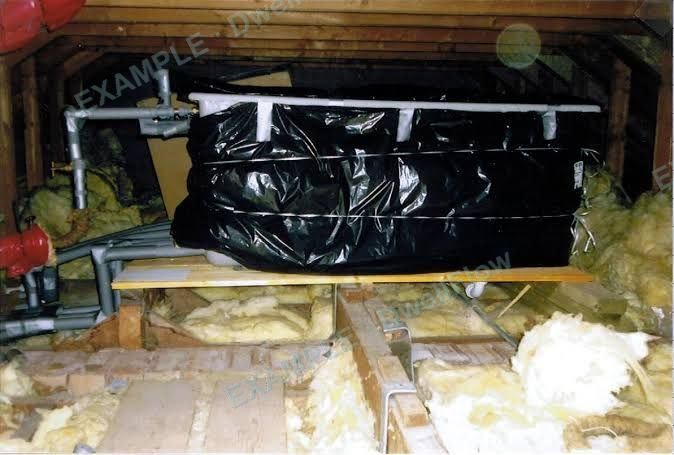
Stop and thinkIt is August. The loft is hot, and the tank water measures 24 °C. The water arriving from the mains is 15 °C. What is happening?Show the answer
The tank is taking up heat from the loft while the water sits in it. The supply is cold, so the 9 degrees were gained in the tank. The fix is insulation around the tank and its pipes, and checking whether the tank holds more water than the household uses.
2. Water that does not move
Moving water stays fresh and close to the temperature it arrived at. Standing water drifts to room temperature, which in a heated home is inside the growth range, and it loses the small amount of chlorine the mains supply carries.
Outlets nobody uses
HSE’s guidance has a definition. An infrequently used outlet is one “not used for a period equal to or greater than seven days”. The pipe that serves it is full of water that is going nowhere. HSE calls this a dead leg: “a pipe leading to an outlet which water flows through but the outlet is unused or rarely used”.
The ones to ask about in every home:
- the basin, bath or shower in a spare room or a second bathroom
- a downstairs toilet and its basin
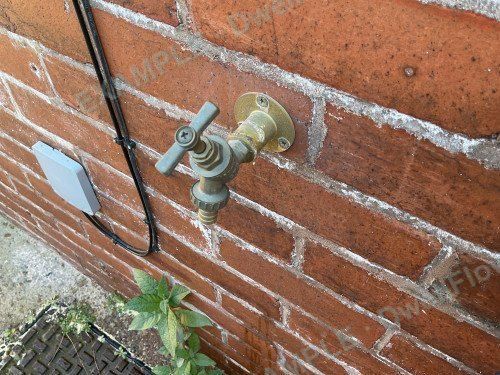
- an outside tap, especially in winter
- a utility room sink
- a tap or appliance connection in a garage or outbuilding
- a shower over a bath when the household only takes baths, or the other way round
You cannot see how often an outlet is used. You have to ask the person who lives there. A survey that does not ask has not found out.
Pipes that lead nowhere
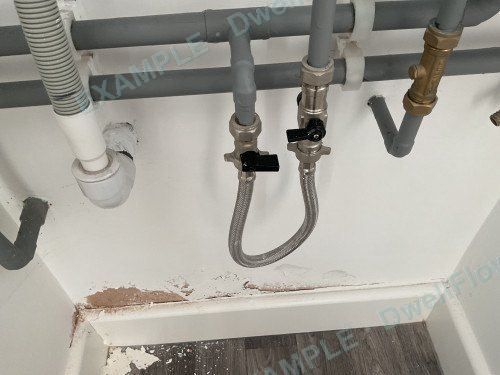
HSE’s second definition: a dead or blind end is “a redundant length of pipe closed at one end, which water cannot flow through”. It is what is left when a basin, a bath or a washing machine is taken out and the pipe is capped where it comes through the wall.
The difference from a dead leg matters. A dead leg can be flushed by running its outlet. A blind end cannot be flushed at all. HSE lists “make sure any redundant pipework identified is removed” among its simple control measures.
Where to look for them:
- under kitchen units where a second sink or an appliance used to be
- in a bathroom that has been refitted, behind bath panels and boxing
- where a washing machine or dishwasher has been moved
- in a loft where a tank has been removed and its pipes capped
- on an outside wall where a tap has been taken off
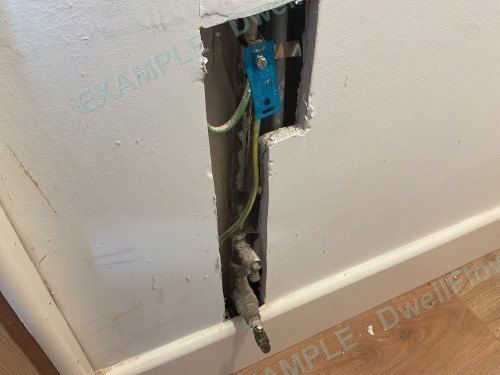
Many are hidden in walls and under floors and cannot be seen. A home that has been altered several times very likely has some. Record what you can see, and say plainly that a visual survey cannot find pipework that is concealed.
The whole property standing empty
An empty home is every outlet unused at once. HSE: “It is important that water is not allowed to stagnate within the water system, so there should be careful management of properties left vacant for extended periods.” Lesson 7 sets out what to do. See also legionella in an empty property.
Small volumes that hold still
Several ordinary fittings hold a little water that barely moves. None is alarming on its own. Each is worth recording, because each needs looking after:
- Flexible hoses under basins and sinks. The rubber lining of many braided hoses is a material bacteria colonise as it ages.
- An expansion vessel on an unvented system. Water sits against a rubber bladder inside it.
- A heating filling loop left connected. The braided hose that tops up a boiler’s heating circuit. It should be disconnected after use.
- Filters, water softeners and scale reducers. Each holds what it removes. One that is never serviced becomes a place for bacteria to grow.
- A boiling water tap. It has a small heated reservoir and often a filter cartridge.
3. Deposits
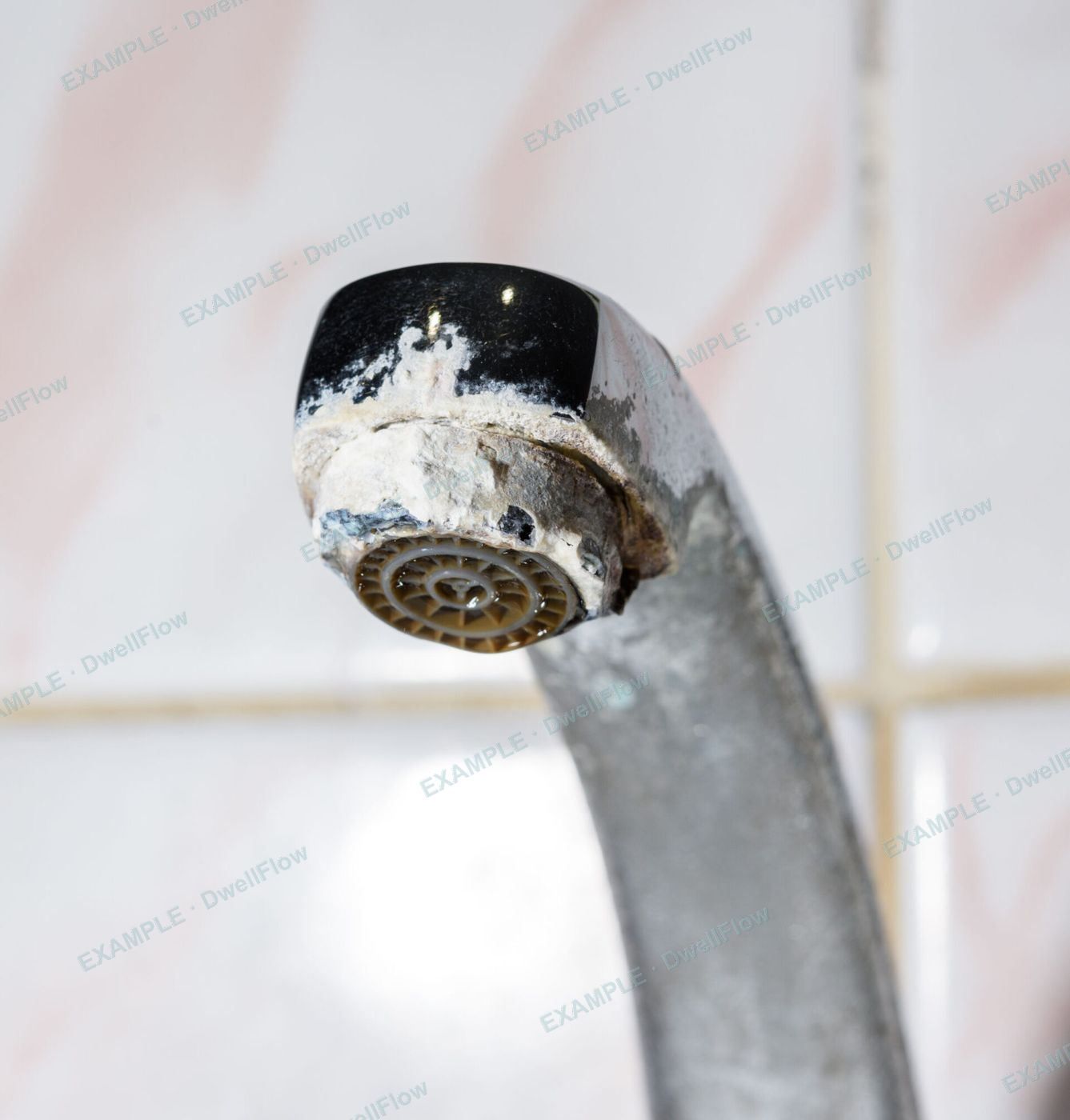
The fourth of HSE’s conditions is “deposits that can support bacterial growth providing a source of nutrients for the organism, such as rust, sludge, scale, organic matter and biofilms”. In a home you will see:
- Limescale on taps, shower heads and around outlets, especially in hard-water areas. It gives bacteria a rough surface to settle on and shelters them from heat.
- Rust and corrosion on visible pipework, and inside an old metal tank.
- Sludge and sediment on the floor of a tank.
- Biofilm: slime at a tank’s water line, or a dark deposit inside a shower head or around a tap spout.
Pipes that warm each other
Temperature can be lost in the pipework as well as in storage. Where a hot pipe and a cold pipe run touching each other, or without insulation, heat passes from one to the other. The cold water warms and the hot water cools, both towards the growth range. Look at any pipework you can see, especially at the incoming main, in an airing cupboard and in a loft.
4. Outlets that make spray
Legionella has to be breathed in to cause illness. So the outlets that make fine spray are the ones where growth elsewhere in the system turns into exposure.
| Outlet | What to check |
|---|---|
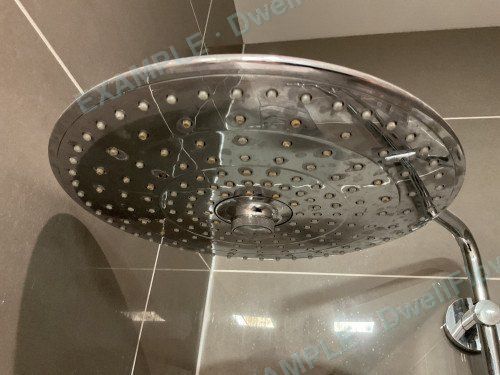
| Showers | Scale, slime or blocked holes in the head. The condition of the hose. How often it is used. HSE says showers “have the means of creating and dispersing water droplets (aerosols) which may be inhaled causing a foreseeable risk of exposure”. |
| A shower hose that reaches the toilet or sits in the bath | If mains pressure drops, water can be drawn back along the hose from whatever the head is lying in. The fix is usually a shorter hose or a clip. |
| Whirlpool and spa baths | Water stays in the jet pipework between uses, and the jets make a fine spray directly over the bather. |
| Outside taps and garden hoses | Water left in a hose warms in the sun and comes out as spray at first use. Check whether a hose is left connected and whether the tap has a check valve to stop water flowing backwards. |
| Pressure washers | They make a large volume of fine spray. They should be run only from the mains. |
| Water butts | Stored, untreated water at outdoor temperature. Low risk when poured from a can at ground level. It should never feed a hose, a sprinkler or a pressure washer. |
HSG274 Part 2 sets the routine for showers and spray taps: dismantle, clean and descale the heads and hoses quarterly, or more often where they foul quickly.
Stop and thinkA bathroom has a bath with a shower over it. The tenant says they only ever take baths. Does the shower matter?Show the answer
Yes. The shower is an outlet nobody uses, fed by pipework full of standing water, and it is the outlet that makes the most spray. The first time someone does use it, they breathe what has been sitting there. It should be run weekly, or removed if it is never going to be used.
5. The people who live there
The last link in the chain is a person. HSE lists who is at higher risk: people over 45, smokers and heavy drinkers, people with chronic respiratory or kidney disease, people with diabetes, lung or heart disease, and anyone with an impaired immune system.
An assessment should record whether anyone in the household is in one of these groups, where the tenant is willing to say. It does not change what is wrong with the water system. It changes how much a fault matters and how quickly it should be put right.
Putting it together
One fault on its own is a finding. Two that connect are a chain, and chains are what a good assessment is looking for. Three examples:
- A cylinder stored at 50 °C is a finding. The same cylinder feeding a whirlpool bath is more urgent, because lukewarm stored water is being delivered to the outlet that makes the most spray.
- A spare-room shower nobody uses is a finding. In a household with an elderly tenant who starts using that room, it matters more.
- An open tank is a finding. An open tank that also feeds the kitchen cold tap is a finding about drinking water as well.
When you find something, ask what it feeds and who uses that. That one question is the difference between listing what is in a house and assessing its risk.