The short version
Temperature is the main control for legionella in a home, and the one you can measure. HSE calls temperature monitoring “a reliable method for confirming the water system is under control”. You need one probe thermometer, three target figures and a watch.
The three figures
| Where | Target | How long to run it |
|---|---|---|
| Hot tap | 50 °C or above | Within one minute |
| Cold tap | Below 20 °C | Within two minutes |
| Stored hot water (a cylinder) | 60 °C or above | Measured at the cylinder, or at the hot tap nearest to it |
| Stored cold water (a tank) | Below 20 °C | Measured in the tank, away from the float valve |
These are HSE’s figures: “Cold water systems should be maintained, where possible, at a temperature below 20°C. Hot water should be stored at least at 60°C and distributed so that it reaches a temperature of 50°C … within 1 minute at the outlets.”
What to measure with
A digital thermometer with a probe. The probe goes into the water. A digital cooking thermometer with a metal probe is the same instrument and will do the job.
Not an infrared thermometer. An infrared thermometer reads the surface of whatever it is pointed at. Pointed at a stream of water or at a tap, it reads the surface and not the water inside, and can be five to ten degrees out. Its numbers look convincing and are wrong, which is worse than having no number.
Every reading in a legionella risk assessment is taken in water: running water at an outlet, or stored water in a tank. Never off the outside of a pipe.
How to take a hot reading
- Choose a tap that delivers hot water only, where there is one.
- Note the time, then turn the hot tap fully on.
- Hold the probe in the running water, just below the spout.
- Watch the reading rise for one minute.
- Record the hottest temperature it reached within that minute.
If it reaches 50 °C in ten seconds, record that and stop. If it only reaches 44 °C after a full minute, record 44 °C. Do not keep running the tap until it gets there. How long the water took is part of what you are measuring.
Hot water burns. Water at 50 °C can scald in seconds, and at 60 °C faster still. Keep your hands out of the stream, hold the probe by its handle, and warn anyone in the room.
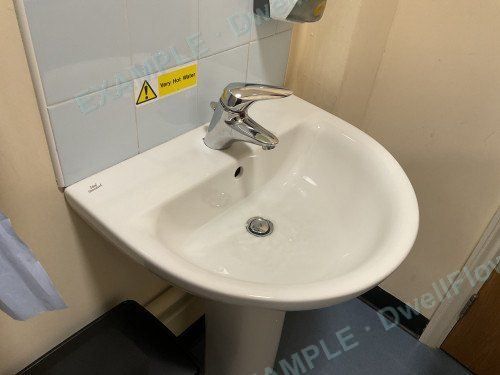
Stop and thinkYou run a hot tap for a minute and it reaches 44 °C. You run it for another two minutes and it reaches 52 °C. Which figure goes in the record?Show the answer
44 °C. The standard is 50 °C within one minute. A tap that takes three minutes to get there is telling you something real about the system: the pipe run is long, the pipes are not insulated, or the water is being stored too cool. Recording 52 °C would hide the finding.
How to take a cold reading
- Note the time, then turn the cold tap fully on.
- Hold the probe in the running water.
- Watch the reading fall for two minutes.
- Record the coldest temperature it reached within those two minutes.
Watch the thermometer while the water runs. A cold tap that starts at 24 °C and drops to 14 °C is telling you the water was sitting warm in the pipe and the supply behind it is cold. A tap that starts at 24 °C and stays there is telling you something else. Note what you saw.
Which outlets to test
HSE uses the term sentinel outlets: “the nearest and furthest outlets from hot and cold water cylinders and tanks”. The nearest shows the water as it leaves storage. The furthest shows what the pipework does to it on the way.
In a home, a sound set of readings is:
- The incoming cold supply. The cold tap nearest the point where the main comes in, which is very often the kitchen tap. This tells you the temperature of the water before the house has done anything to it.
- The hot tap nearest the cylinder or boiler.
- The hot and cold taps furthest from it. Often the top-floor bathroom or an en-suite.
- Any outlet that is rarely used.
- The stored water itself, where there is a tank or cylinder you can safely reach.
In a small flat with a combi boiler that may be three readings. In a large house with a tank and two bathrooms it may be ten.
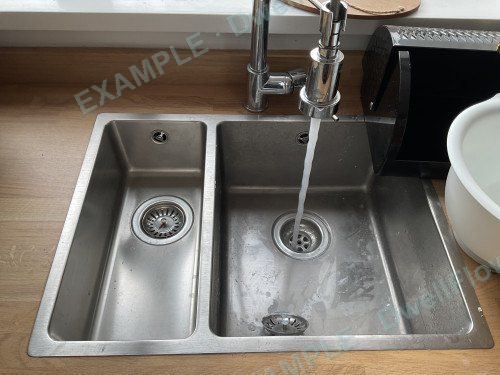
Stored water
A hot water cylinder
You cannot put a probe inside a cylinder. Take the reading at the hot tap nearest to it, with the water run until the temperature stops rising. Many cylinders also have a thermostat with a marked dial. Note its setting, but trust the measured temperature over the dial.
Take the reading when the water has been heated. If the heating is on a timer and has been off for hours, the result tells you about the timer and not about the thermostat. Ask when the hot water was last on, and record it.
A cold water tank
Lift the lid and lower the probe into the water, away from the float valve where fresh water comes in. Compare the reading with the incoming supply. A tank that is several degrees warmer than the water arriving is taking up heat from the loft.
Lofts. Only go into a loft that is boarded, lit and safe to move about in. If the tank cannot be reached safely, do not reach it. Record that it could not be accessed. An honest gap is a finding the landlord can act on.
Outlets that blend hot and cold
A thermostatic mixing valve, or a thermostatic shower, mixes cold water into the hot before it reaches the outlet. A reading taken there tells you what the valve is set to. It cannot tell you how hot the system is.
- For the system temperature, use an outlet that is not blended.
- Still take a reading at the blended outlet, and record that it is blended. A mixing valve is designed to deliver between about 38 °C and 46 °C, depending on what it serves. One delivering well outside that range is set wrongly or has stopped regulating.
What a failed reading is telling you
| The reading | What it usually means |
|---|---|
| Hot tap below 50 °C after a minute, near the cylinder | The stored water is not hot enough: the thermostat is set low, the timer is short, or a part has failed. |
| Hot at the nearest tap, not at the furthest | Heat is being lost on the way: a long pipe run, or pipes with no insulation. |
| One hot outlet low, the others fine | Something at that outlet is blending cold in: a mixing valve, or a mixer tap that is not shutting off. |
| Cold above 20 °C at one tap, fine at the kitchen | The pipe to that tap runs somewhere warm, touches a hot pipe, or the tap is fed from a warm tank. |
| Cold above 20 °C everywhere, kitchen included | The supply is arriving warm. In a hot spell mains water goes above 20 °C. That is why HSE says “where possible”. |
| Tank water warmer than the incoming supply | The tank is gaining heat from the loft, or holds more water than the household uses. |
Warm weather
Mains water warms in summer. On a hot day the supply can arrive above 20 °C, and no plumbing in the house will bring it down. That is not a fault in the property. Record the incoming temperature, the outdoor temperature and the date, and take the readings again in cooler weather. If the supply is still above 20 °C on a cold day, something inside the property is heating it.
Stop and thinkIn January the kitchen cold tap reads 9 °C. The upstairs bathroom cold tap reads 23 °C after two minutes. What do you suspect?Show the answer
The supply is cold, so the house is adding the heat. The bathroom tap is probably fed from a tank that is running warm, or its pipe runs beside a hot pipe or through a heated space. Record both readings. The assessment should ask for the pipe to be traced.
Hot water and scalding
The temperatures that control legionella are hot enough to burn. Water at 50 °C and above can cause a serious scald, quickest in young children, older people and anyone with reduced sensation or mobility.
The answer is never to turn the cylinder down. That swaps a burn risk for a legionella risk. Where someone in the household is at particular risk of scalding, a thermostatic mixing valve at the bath or basin limits the temperature at that outlet while the stored water stays hot. Lesson 7 covers this.
Write down what you measured
- The outlet, the room, and whether it was hot or cold.
- The temperature the thermometer showed, to one decimal place if it gives one.
- Whether the outlet is blended.
- The date, and the weather if it was hot.
Record what you measured, not what you expected. A reading that fails is a finding. A reading that was guessed, rounded up or left out is a false record on a document somebody may rely on.