The short version
An assessment is finished when three more things are done: it is written down, the people who live there have been told what they need to know, and there is a plan to look again. This lesson covers each.
Writing it down
Does the law require a record?
HSE’s answer for landlords:
Landlords are not necessarily required to record the findings of the assessment (this is only a statutory duty for employers where there are 5 or more employees), but you may find it wise to keep a record of what has been done for your own purposes.
A letting agent or a housing provider with five or more employees is an employer in that sense, and must record it. A private landlord with one house is not required to. There are four good reasons to do it anyway:
- It is the only proof the duty was met. An assessment nobody wrote down cannot be shown to anyone.
- The next review starts from it. You can only tell what has changed if you know what was there.
- It tells other people what to do. An agent, a new owner, a plumber or the tenant can read it.
- It keeps the actions honest. A written recommendation with a date is harder to forget.
What the record should contain
HSE’s brief guide lists what a risk assessment should include:
- management responsibilities, including the name of the competent person
- a description of the system
- any potential risk sources
- any controls currently in place to control risks
- monitoring, inspection and maintenance procedures
- records of the monitoring results, inspection and checks carried out
- a review date
For a rented home, that works out as:
| Section | What goes in it |
|---|---|
| The property and the people | The address. Who the landlord is, and the agent if there is one. Who carried out the survey, and when. |
| The system | How the water is heated. What is stored and where. The outlets, room by room. A simple diagram helps. |
| What was measured | Every temperature, with the outlet it was taken at and whether that outlet is blended. |
| What was found | Each finding, with its photograph, why it matters, and how serious it is. |
| What to do | An action for each finding, who should do it, and by when. |
| What was not checked | Anything that could not be reached or identified, said plainly. |
| The routine | The regular checks from Lesson 7: what, how often, and who. |
| The review | When it will be looked at again, and what would bring that forward. |
The log
Alongside the assessment, keep a simple dated list of what is done afterwards: each temperature check, each time an unused outlet was flushed, each shower head cleaned, each repair. One line per entry is enough. Date, what was done, the reading if there was one, and who did it.
Stop and thinkA landlord did a careful assessment three years ago and remembers it well, but wrote nothing down. A new agent takes over the property. What does the agent have to go on?Show the answer
Nothing. The agent cannot see what was checked, what was found or what was done about it, and cannot tell what has changed since. In practice the assessment has to be done again. A page of notes and a few photographs would have saved it.
How long to keep it
HSE’s code of practice, L8, paragraph 72:
These records should be retained throughout the period they are current and for at least two years afterwards. Retain records of any monitoring inspection, test or check carried out, and the dates, for at least five years.
So:
- The assessment: for as long as it is the current one, and two years after it is replaced.
- The log of checks: five years.
Reviewing it
There is no fixed interval
Many landlords are told the assessment must be renewed every year or every two years. HSE says otherwise:
The law does not prescribe that the risk assessment be reviewed on an annual or biennial basis. It is important to review the assessment periodically in case anything changes.
The two-year figure comes from the record-keeping rule above. Two years is how long to keep an old assessment, not how often to make a new one. There is more on this in how often a legionella risk assessment should be reviewed.
What should prompt a review
L8, paragraph 47, says the assessment should be reviewed regularly and “specifically whenever there is reason to suspect it is no longer valid”. It lists six examples:
- changes to the water system or its use
- changes to the use of the building in which the water system is installed
- the availability of new information about risks or control measures
- the results of checks indicating that control measures are no longer effective
- changes to key personnel
- a case of Legionnaires’ disease or legionellosis associated with the system
In a rented home, those look like this:
| What happened | Why it matters |
|---|---|
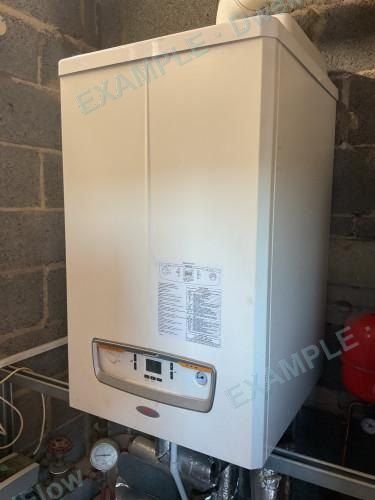
| A new boiler, cylinder or bathroom | The system has changed. A new combi may leave an old tank and its pipes behind. |
| A fitting taken out, or a room changed | New redundant pipework, or an outlet that is no longer used. |
| The property stood empty | The water has been standing. |
| A new tenant | Different people use different outlets, and may be at higher risk. |
| A change in how it is let | A family home that becomes a house in multiple occupation, or a holiday let, is used very differently. |
| A temperature check that fails | A control has stopped working. |
| The tenant reports a problem with the hot water | The same. |
| A new agent or a new owner | The person responsible has changed, and needs to know what they have taken on. |
If none of those has happened, look at the assessment again periodically all the same. A visit you already make, such as the yearly gas safety check, is a sensible moment to confirm that nothing has changed and to take a temperature.
Stop and thinkThe same tenant has lived in a house for six years. Nothing has been altered, and the yearly temperature checks have all passed. Does the assessment need redoing?Show the answer
Not for the sake of a date. The law sets no fixed interval, and none of HSE’s review triggers has happened. What it needs is what it has been getting: a periodic look to confirm nothing has changed, and the checks kept up and written down. Ask the tenant whether anything about how they use the house has changed.
What to tell your tenants
The tenant runs the water system every day. Most of the controls depend on them. HSG274 Part 2, paragraph 2.143:
Landlords should inform tenants of the potential risk of exposure to legionella and its consequences and advise on any actions arising from the findings of the risk assessment, where appropriate.
HSE’s landlord guidance says tenants should:
- not adjust the temperature setting of the calorifier (the hot water cylinder)
- regularly clean showerheads
- inform the landlord if the hot water is not heating properly or there are any other problems with the system, so that appropriate action can be taken
A plain version for a tenant
Tenants do not need the regulations. They need a short list in ordinary words. Something like this:
- Leave the hot water setting alone. It is set hot on purpose. If it seems too hot at a tap, tell us and we will sort it out at the tap.
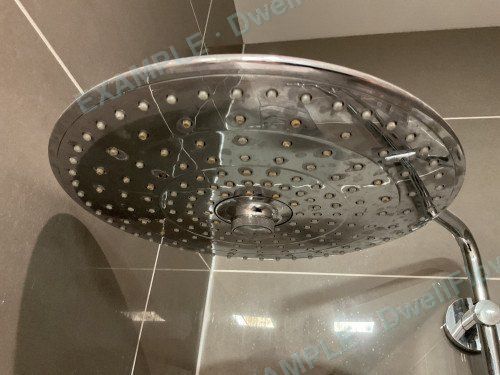
- Clean your shower head every three months. Unscrew it, scrub off any scale, soak it in a descaler or disinfectant, rinse it and put it back.
- Use every tap and shower at least once a week. If there is one you do not use, run it for a couple of minutes each week.
- After a week or more away, run the taps and the shower for a few minutes before you use them. Start the shower with the head pointing down into the tray.
- Tell us if the hot water is not hot, the cold water runs warm, or the water looks or smells wrong.
- Do not leave a hose connected to the outside tap.
Give it to them in writing at the start of the tenancy, and keep a note that you did. Do not alarm them. In most homes the risk is low, and these few habits are what keep it that way.
The whole thing, start to finish
You have now covered the full job:
- Understand what legionella is and what lets it grow. (Lesson 1)
- Know the duty: assess the risk and control it. (Lesson 2)
- Understand the system you are looking at. (Lesson 3)
- Know where the risk is in a home. (Lesson 4)
- Measure the temperatures properly. (Lesson 5)
- Survey the property in the order the water flows. (Lesson 6)
- Act on what you find, and keep the controls working. (Lesson 7)
- Record it, tell the tenant, and review it when something changes. (Lesson 8)
This course gives you the knowledge. It is not a qualification and it carries no accreditation. HSE says most landlords do not need one. If you finish it unsure whether you could assess a particular property, that is a sound judgement and not a failure: HSE says a landlord who does not feel competent “can arrange for someone to do it on their behalf”.
How DwellFlow produces the record
DwellFlow turns a survey into the record this lesson describes. You answer the questions and take the readings and photographs on your phone. AI checks the survey before you submit it, then writes three documents:
- The risk assessment. The system, every reading, every finding with its photograph, and a recommendation for each with the HSE clause behind it.
- The tenant sheet. The plain version above, written for that property.
- The written scheme of control. The landlord’s routine: what to check, how often, and what should prompt a review.
Starting is free, and you see what the survey found before you decide. The documents are £9.99 ex VAT a property. Read a full example report first if you would like to see exactly what you get.
Finished the lessons? Test yourself with twenty questions.