The short version
Legionella is a bacterium that lives in water. It is harmless in the small numbers found in a mains supply. It becomes a risk when three things line up: water that lets it multiply, an outlet that turns that water into a fine spray, and a person who breathes the spray in. A legionella risk assessment looks for those three things in a building’s water system.
What legionella is
HSE describes legionella bacteria as “widespread in natural water systems, such as rivers and ponds”. In those places the conditions are rarely right for anyone to catch anything. The bacteria reach buildings in the water supply, in numbers too small to matter.
The problem starts inside man-made systems. HSE says outbreaks come from legionella “growing in purpose-built systems where water is maintained at a temperature high enough to encourage growth”, and names cooling towers, evaporative condensers, hot and cold water systems and spa pools, “in all sorts of premises (work and domestic)”. A home has a hot and cold water system, so a home is on that list.
The illnesses it causes
Legionellosis is the name for all the illnesses caused by legionella bacteria. There are three you should know:
- Legionnaires’ disease. The serious one. HSE calls it “a potentially fatal form of pneumonia”.
- Pontiac fever. A similar but less serious illness.
- Lochgoilhead fever. Also similar and less serious.
Symptoms
HSE says the first symptoms of Legionnaires’ disease are similar to flu: a high temperature, feverishness and chills, a cough, muscle pains and a headache. It can go on to cause pneumonia, diarrhoea and signs of mental confusion. It is treated with antibiotics.
Because it looks like flu, it is not always diagnosed quickly. Anyone who has these symptoms and is worried should see a doctor.
How people catch it
In HSE’s words: “People contract Legionnaires’ disease by inhaling small droplets of water (aerosols), suspended in the air, containing the bacteria.”
The droplets have to be small enough to be breathed deep into the lungs. In a home, the outlets that make them are:
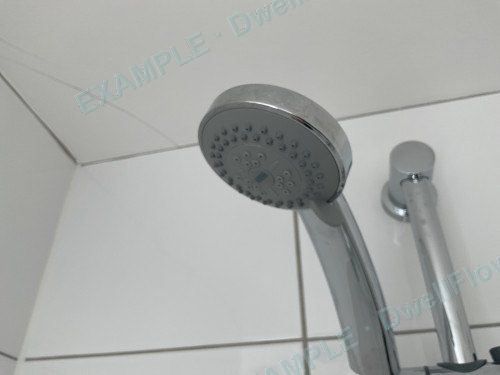
- showers, which make the most spray of any ordinary outlet
- spray taps and hose attachments
- whirlpool and spa baths
- garden hoses, sprinklers and pressure washers
- to a lesser degree, any tap running hard into a basin, and a flushing toilet
The NHS lists three ways you cannot usually catch it:
- drinking water that contains the bacteria
- from other people who have the infection
- from places like ponds, lakes and rivers
HSE says the same about people: Legionnaires’ disease “is not known to spread from person to person”.
Stop and thinkA tenant asks: “Is it safe to drink the water while the shower is being sorted out?” What do you tell them?Show the answer
Legionnaires’ disease is caught by breathing in droplets, and the NHS says you cannot usually get it from drinking water that contains the bacteria. So drinking from the kitchen tap is not how it spreads. The shower is the outlet to sort out, because that is where spray is made.
Who is most at risk
HSE says “everyone is susceptible to infection”, that the risk increases with age, and that some people are at higher risk:
- people over 45 years of age
- smokers and heavy drinkers
- people suffering from chronic respiratory or kidney disease
- people with diabetes, lung and heart disease
- anyone with an impaired immune system
This matters for an assessment. The same water system carries more risk when the people living with it are in one of these groups. A survey asks who lives in the property for that reason.
The four conditions that increase the risk
HSE lists four. Learn these; every question in a survey comes back to one of them.
- Temperature. “The water temperature in all or some parts of the system may be between 20-45 °C, which is suitable for growth.”
- Droplets. “It is possible for breathable water droplets to be created and dispersed.”
- Stored or recirculated water. “Water is stored and/or recirculated.”
- Food for the bacteria. “There are deposits that can support bacterial growth providing a source of nutrients for the organism, such as rust, sludge, scale, organic matter and biofilms.”
What biofilm is
Biofilm is the slimy layer that builds up on any surface that stays wet: the inside of a pipe, the wall of a tank, the inside of a shower hose. It is a living layer of bacteria and the material they produce. It matters because it feeds legionella and shelters it from heat and from disinfectant. Scale and rust give biofilm a rough surface to grip. Water that stands still gives it time to build.
The chain
Put the four conditions together and the risk in any home is a chain with three links:
- Growth. Somewhere the water is warm, still, or has food in it.
- Spray. An outlet that turns that water into droplets.
- A person. Somebody breathing the droplets in.
Break any link and the risk falls. Keeping water at the right temperature and keeping it moving breaks the first. Clean shower heads and sensible use of hoses weaken the second. The third cannot be removed from a home, which is why the first two get the attention.
Why most homes are low risk, and why that is not the end of it
HSE says the risks from hot and cold water systems in most residential settings “are generally considered to be low owing to regular water usage and turnover”. A family that showers every day and runs every tap keeps the water moving and fresh.
The risk rises when that stops being true. The common causes are:
- a property that stands empty between tenants
- a bathroom, basin or outside tap nobody uses
- hot water stored too cool, or cold water stored too warm
- a tank that is open, dirty or oversized for the household
- pipework left behind when a fitting was taken out
- a tenant who is in one of the higher risk groups
Most homes have none of these. The purpose of an assessment is to find the home that does.
Stop and thinkA family home, lived in every day, with a combi boiler and no stored water. Where could a risk still come from?Show the answer
From anything that is not used. A spare-room basin, an outside tap through the winter, a shower nobody takes. From pipework left behind when a fitting was removed. And from a shower head that has never been cleaned. A low-risk system can still have a risky corner.