Example report · a fictional
property, produced by the real DwellFlow engine · dwellflow.co.uk
Legionella Risk Assessment · Domestic Property
Millbrook Lettings (Example)
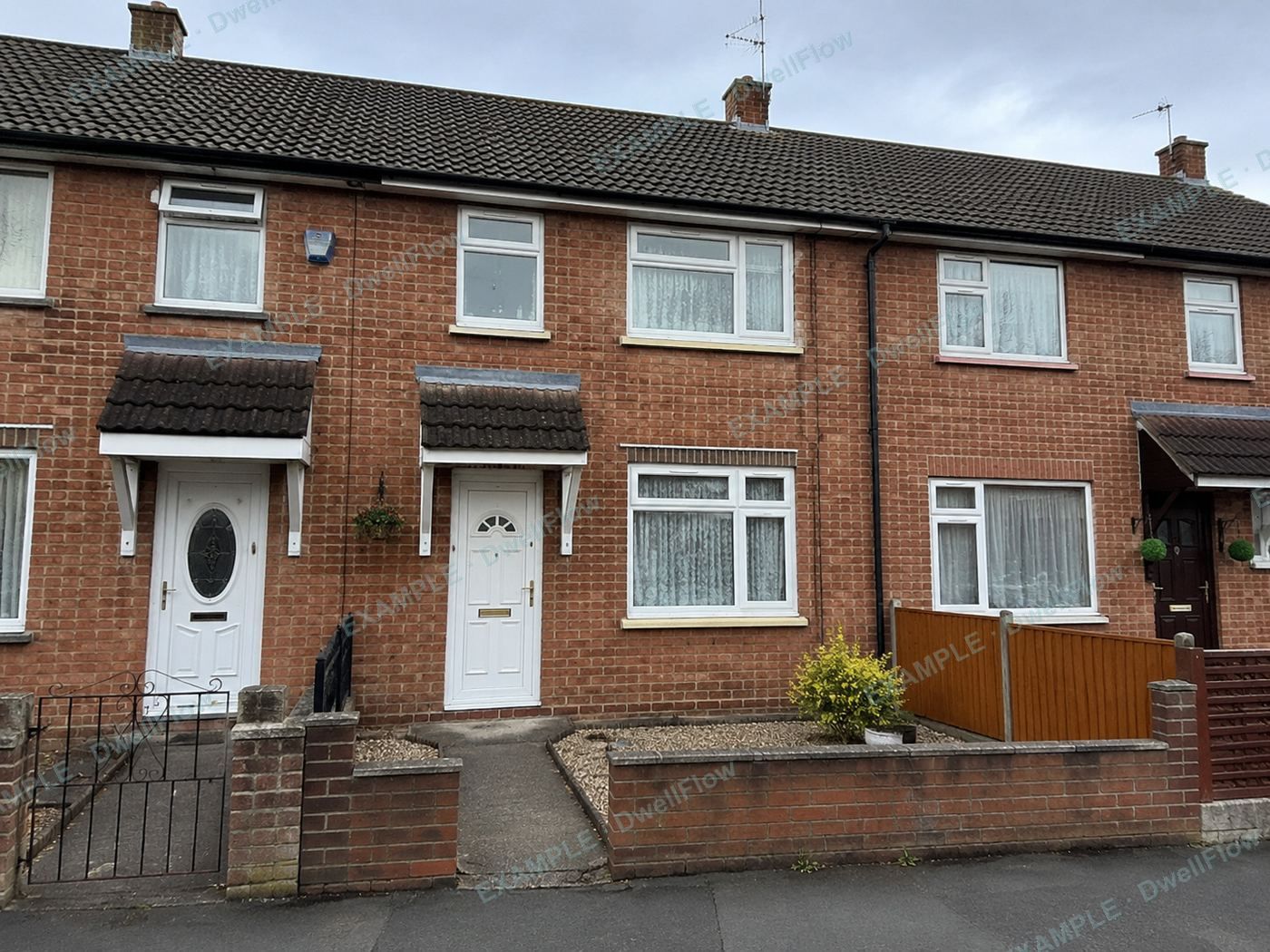
8 Bramble Court
Netherfield, NG99 9RD
10/25Low risk
9recommendations
1high priority
15 August 2029reassess by
Reference
DOM-00231
Property
A terraced house, built between 1970 and 2000
Date of survey
15 August 2026 · 16 minutes on site
Conditions at survey
19 °C outside
Surveyed by
Jamie Carterof Millbrook Lettings (Example)
Duty holder
Mr and Mrs J Whitfield (Example)the
landlord or owner
Date of issue
15 August 2026
Objective
This assessment determines the likelihood of Legionella bacteria growing
in the water system at this property, and of anyone being exposed to them.
It considers the design, condition and use of the system together with the
control measures in place, and sets out priority-rated recommendations and
a scheme of control to keep the risk low. It is issued with an information
sheet for the occupants and a Written Scheme of Control for whoever is
responsible for the property.
Assessed Against
The Health and Safety at Work etc. Act 1974
The Control of Substances Hazardous to Health Regulations 2002 (COSHH)
Approved Code of Practice and Guidance L8 (4th edition) — The control of Legionella bacteria in water systems
HSG274 Part 2 — The control of Legionella bacteria in hot and cold water systems
BS 8580-1:2019 — Water quality: risk assessments for Legionella control
The Water Supply (Water Fittings) Regulations 1999
HSE guidance for landlords — Legionella and landlords’ responsibilities
Conditions requiring attention were identified at this
assessment.
Nine recommendations are made below, with two further advisory notes. One is high priority and should be completed within 30 days.
The rating reflects both the building itself and what was found on the day. Completing the priority actions above will reduce it.
Why this score, and how to lower it
Contamination +1 — a hose left connected to the outside tap → recommendation 6
Amplification +1 — pipework holding water that never moves → recommendations 3, 5
Transmission +1 — a shower — the outlet in a home that makes a breathable spray
Exposure +1 — the property is lived in
Susceptibility +1 — no vulnerability is known, which is not the same as knowing there is none
Completing recommendations 3, 5, 6
brings this property to 8 / 25 — Low risk. Beyond that, what remains is the property itself — a lived-in home with a shower — and the
risk is then as low as is reasonably practicable. The routine in the
scheme of control is what keeps it there.
1 Recommendations
1High prioritywithin 30 days
5Mediumwithin 3 months to 6 months
3Lowwithin 6 months
2Advisoryfor awareness
In priority order. Each carries the standard it comes from,
where it applies, and the evidence photographed on the day.
1
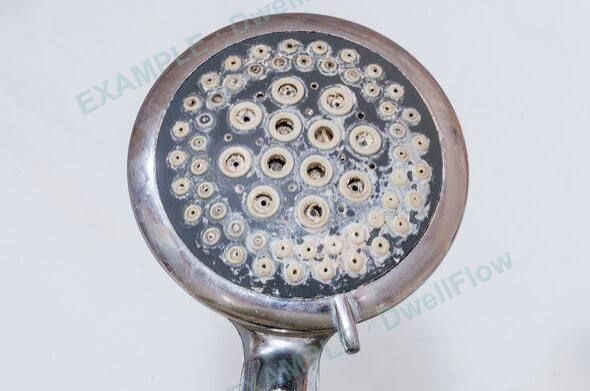
Remove, clean, descale and disinfect the head and hose, or replace if heavily fouled
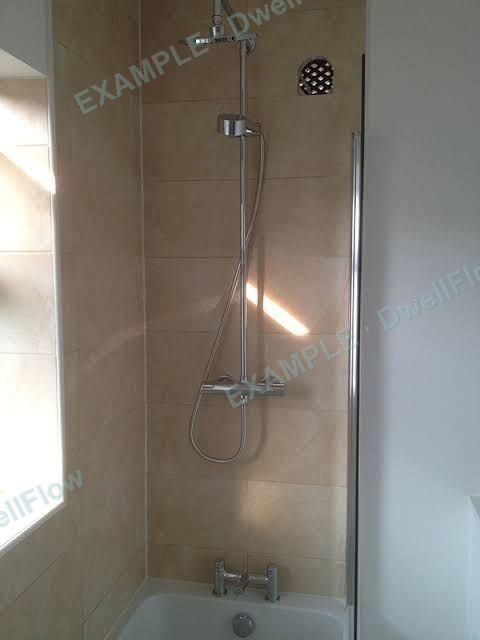
Heavy scale was present on the shower head in the bathroom (first floor). Showers are the only outlets in most homes that produce a respirable spray, and scale gives bacteria a rough surface to settle on and somewhere to shelter from heat and disinfection.
Then clean and disinfect it quarterly.
Location: Bathroom (First floor)
HSG274 Pt2 2.142 — showerheads in domestic rented property
Shower head (handheld) — Bathroom (First floor)
High · 30 days
2
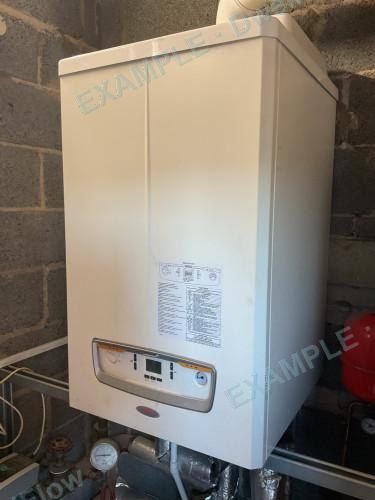
Check the boiler's hot water setting first
Hot water at the kitchen reached only 47.9 °C after one minute of running. Hot water at the bathroom (first floor) reached only 48.6 °C after one minute of running. Hot water should reach 50 °C within one minute at the outlet.
Water is heated on demand here and none is stored, so the only causes available are that setting, the length of the pipe run, and missing insulation on it. Retest once corrected.
Applies to: Kitchen and Bathroom (First floor)
HSG274 Pt2 para 2.82
Gas combi boiler — Kitchen
Medium · 3 months
3
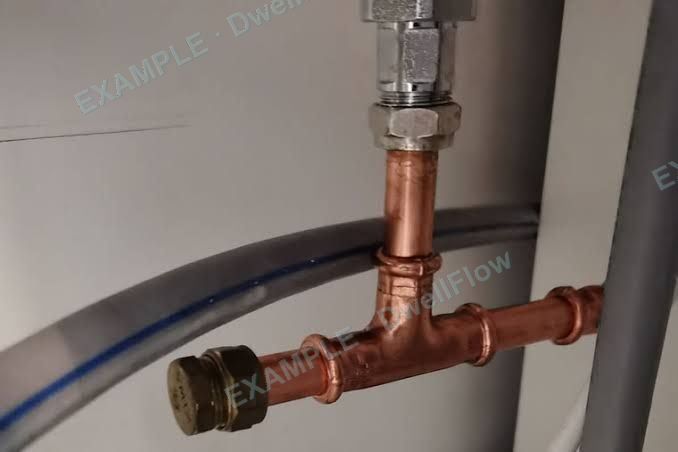
Cut the redundant section back to the nearest point of flowing water, leaving no dead end
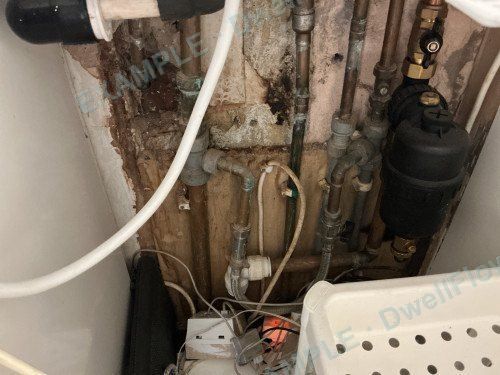
Redundant pipework was identified in the kitchen, described as capped 15 mm feed under the sink where a dishwasher was removed. The isolating valve is closed and the pipe is capped about 20 cm beyond it. Water within it never moves and cannot be flushed by normal use.
Capping the pipe close to the fitting does not remove the stagnant volume.
Location: Kitchen
HSG274 Pt2 2.166 — dead legs should be removed where reasonably practicable
Redundant pipework — Kitchen
Medium · 3 months
4
Descale the fitting, then keep on top of it as part of routine cleaning
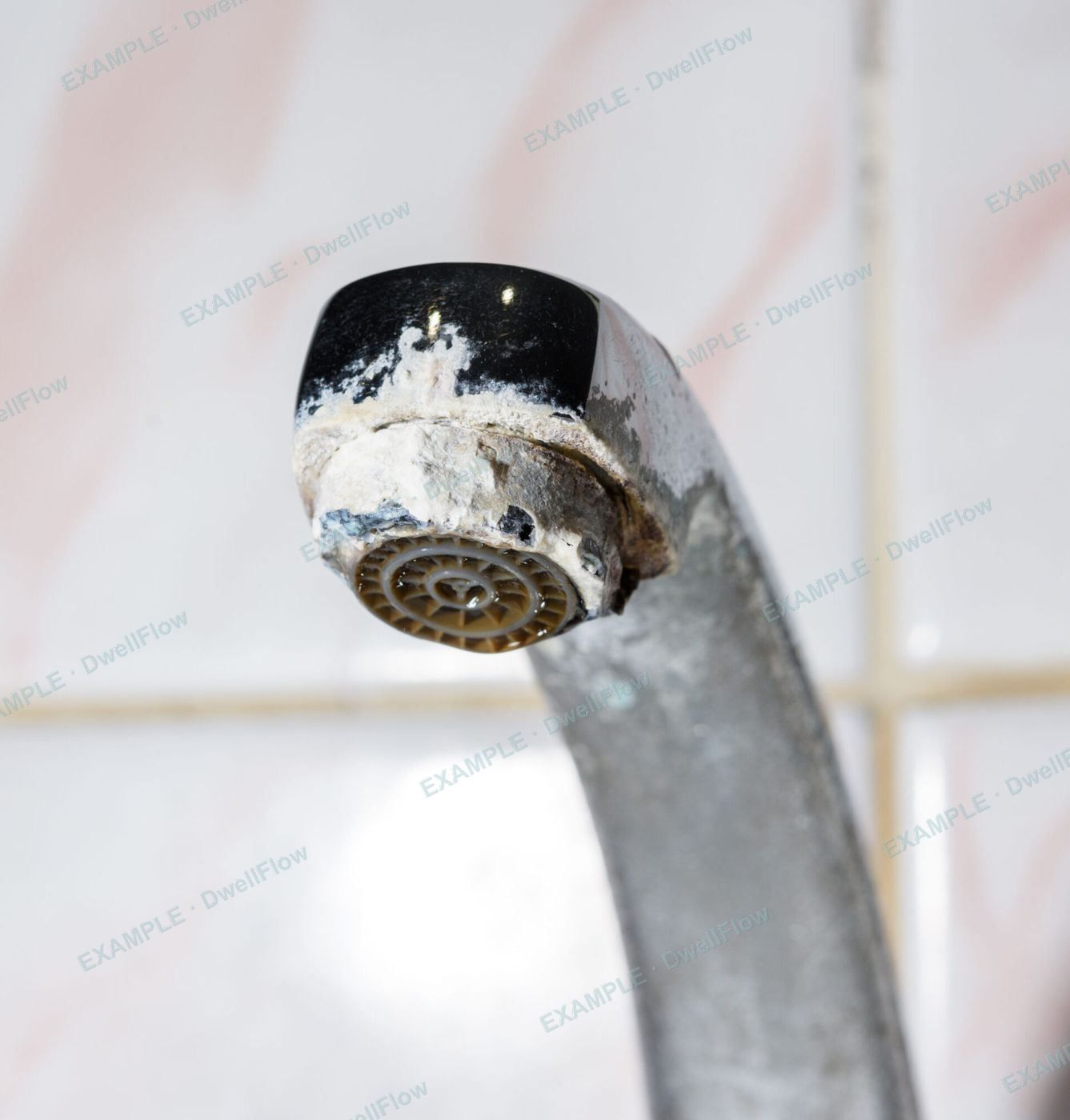
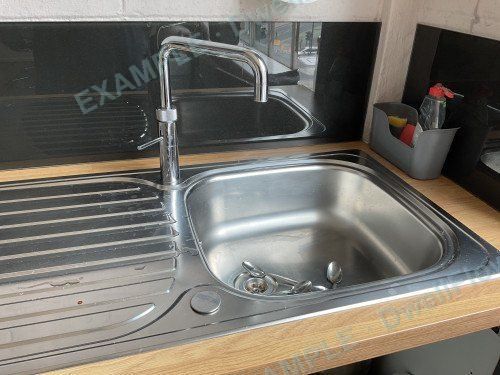
Heavy limescale was visible on the fittings in the kitchen. Scale shelters bacteria from heat and disinfection and provides a surface they colonise.
Where scale rebuilds quickly, water softening or inhibition is worth considering — but maintain any device fitted, or it becomes a habitat of its own.
Location: Kitchen
HSG274 Pt2 — cleanliness of outlets
Limescale — Kitchen
Medium · 6 months
5
Disconnect the filling loop at one end and store it, reconnecting only when the system needs repressurising
The heating system filling loop at the boiler in the kitchen was found connected. The flexible hose links the mains drinking supply to the sealed heating circuit; left in place it is both a stagnant length of pipework that will not be replenished in normal use, and a route by which inhibitor-dosed heating water could be drawn back into the drinking supply if the mains pressure drops.
Confirm a double check valve is fitted where it tees off the mains cold supply.
Water Supply (Water Fittings) Regulations 1999 · HSG274 Pt2
Heating filling loop — Kitchen
Medium · 3 months
6
Disconnect and drain the hose after each use and store it off the ground
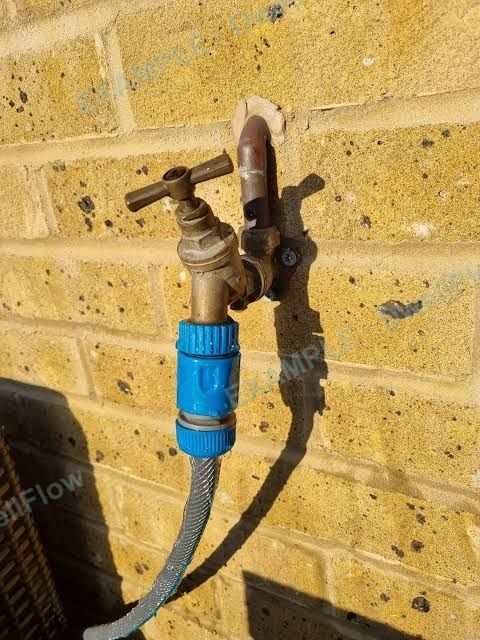
A hose was left connected to the outside tap. Water standing in a hose warms quickly in sunlight and is discharged as spray at first use; if the open end lies in a water butt, pond, puddle or container, a drop in mains pressure can draw that water back toward the drinking supply.
Confirm a double check valve is fitted to the outside tap.
Water Supply (Water Fittings) Regulations 1999
Outside tap
Medium · 3 months
7
When these are next disturbed or replaced, use WRAS-approved hoses or rigid copper
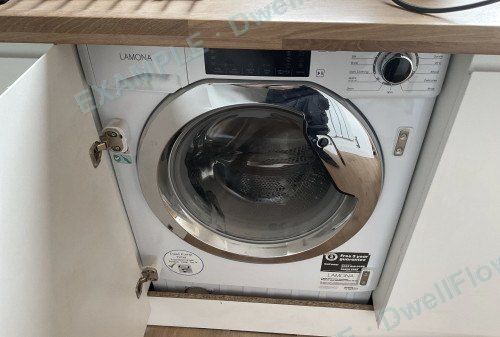
Braided flexible connector hoses serve the fittings in the kitchen and the bathroom (first floor). The rubber lining of many flexible connectors is EPDM, a material bacteria colonise readily as it ages and pits.
No urgent action is needed — check their condition at routine visits and replace any that are perished, kinked or past their stated life.
Applies to: Kitchen and Bathroom (First floor)
HSG274 Pt2 — materials of construction; WRAS
Flexible hoses — Kitchen
Low · 6 months
8
Insulate the visible run of the incoming main, and check the insulation remains continuous and undamaged at routine visits
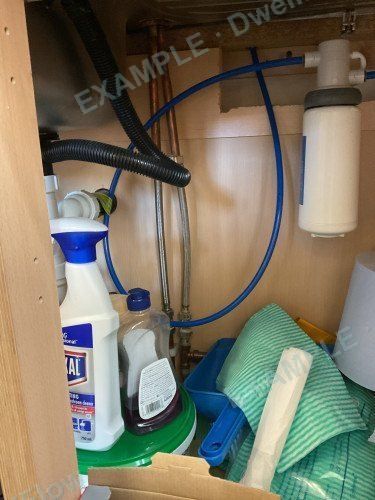
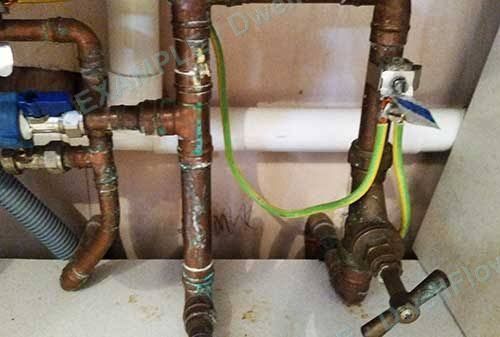
The visible pipework at the incoming main is not fully insulated. The incoming supply is the coldest water in the house, and bare pipework lets it warm towards room temperature before it reaches a single tap.
HSG274 Pt2 — insulation of cold water services
Stop tap and incoming pipe — Under the kitchen sink
Low · 6 months
9
Retain this assessment, the tenant information sheet and the Written Scheme of Control issued with it as the property record
No previous Legionella risk assessment was available for this property, and no records of temperature checks or flushing.
The scheme sets out what is required of the landlord on an ongoing basis — the checks folded into routine visits, the triggers for having the assessment reviewed, and the flushing procedure for any period the property stands empty. Keep a simple dated record of each task in that routine, and produce it on request.
ACoP L8 — record keeping
Low · 6 months
10
Small devices are commonly fitted to the pipework serving a water heater — a scale reducer or an in-line filter.
No action is needed before the next routine service. At that service, ask the engineer to confirm what is fitted to the supply and whether any of it is serviceable, and to service or replace it to the manufacturer's schedule. Record what is fitted, the date done and the date due with the property's water safety records, so the next assessment starts from an answer rather than this note.
HSG274 Pt2 2.80 — scale and biofilm reduce the efficacy of any control measure
Advisory
11
At this property's age it is likely that alteration or refurbishment has taken place at some point in its life.
No immediate action is required. If future refurbishment, maintenance or repair work exposes concealed pipework, any redundant sections found should be cut back to the live main at that time rather than re-covered.
HSG274 Pt2 2.166 — dead legs should be removed where practicable
Advisory
2Assessment of the Risk
This property is fed directly from the mains with no stored water. That
is the lowest-risk arrangement a dwelling can have: water arrives cold, is
heated only as it is used, and does not stand still anywhere by design.
What raises it above that baseline is specific to this visit:
redundant pipework holding water that never moves and hot water arriving at outlets below the 50 °C the guidance
looks for.
The shower in the bathroom (first floor) is where water
becomes a breathable spray, and so what matters most here. The
recommendations above deal with the conditions found upstream of
it.
Completing the priority action
above breaks the chain at the point where it is easiest to break — the
conditions that let numbers build. The remaining actions reduce what can
get in and what can stand still.
3Property and Water System Description
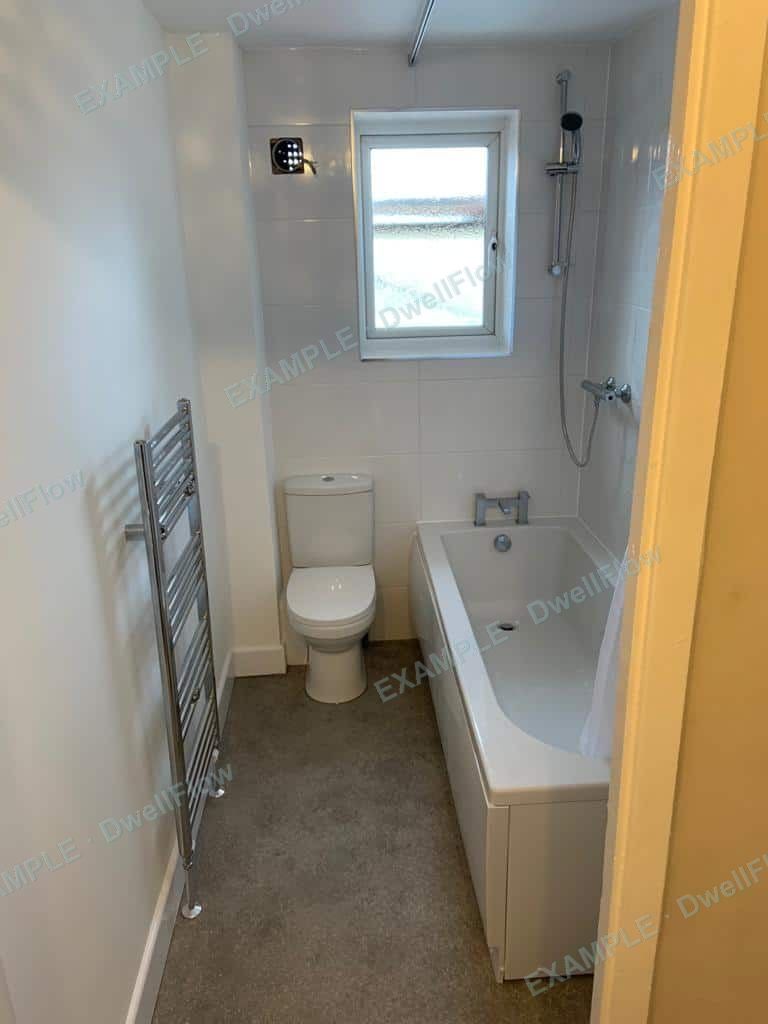
The property is a terraced house, built between 1970 and 2000, arranged over two floors, with two bedrooms, of brick construction. It was occupied at the time of the survey by two
residents.
Water enters the property from the public mains, with the internal stop tap located under the kitchen sink. The incoming supply pipe is copper, and the supply was recorded at 14.8 °C.
Cold water is supplied directly from the mains to every fitting,
with no storage tank. This is the lower-risk arrangement: water is not
held anywhere on its way to an outlet.
Hot water is produced on demand by a combination boiler. None is
stored, which removes the largest single store of warm water a dwelling
can have.
Water is distributed to six
fittings across two
rooms (Kitchen, Bathroom (First floor)). Of these, the shower in the bathroom (first floor) produces
a breathable spray, and is therefore the
point at which the system could expose
anyone to airborne water.
4The Water System, As Drawn
Cold water (mains)Hot waterEach room shows the fittings recorded in it · not to scale
Drawn automatically from the survey. Connections follow from what each
asset is — a vented cylinder is tank-fed by definition, a combi or an
unvented cylinder is mains-fed. Pipe routing within the
property is not traced by such a survey, so each service is drawn as one
line with a spur to every room it serves. The heating circuit is a sealed
system, is not drinking water, and is not drawn.
5Water System Assets
Each asset
that supplies, stores, heats or treats water, with the detail and photographs
recorded at the survey. Values outside the standards applied are shown in
red.
Incoming Mains Supply
Stop tap
Under the kitchen sink
Stop tap operation
Turns freely
Pipe material
Copper
Insulation of visible run
Bare — no insulation
Supply temperature
14.8 °C
Reading taken at
Kitchen sink
Stop tap and incoming pipe — Under the kitchen sink
See recommendation
8.
Cold Water Storage — None
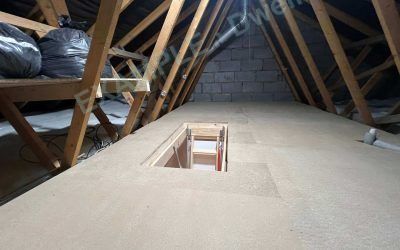
The loft was accessed and inspected. No cold water storage tank serves this property, and every
cold outlet is supplied directly from the incoming main. Whether
any pipework from a removed tank remains was not established.
Mains-fed
throughout is the most favourable arrangement a dwelling can have. Water
that is never stored cannot warm, stand or be contaminated in a tank,
which removes the largest single source of risk in a domestic system and
is the reason this assessment and its scheme of control are as short as
they are.
Surveyor’s note. Loft hatch on the landing, accessed and inspected. No cold water storage tank and no capped tank pipework above the insulation.
Storage check — no tank found
Hot Water System
Type
Combination boiler — instantaneous, no storage
Make and model
Worcester Bosch
Scale inhibitor / inline filter
None fitted
Gas combi boiler — Kitchen
See recommendations
2, 10.
Other Plumbed Equipment
Outside tap
6Hot and Cold Water Distribution
Room
Outlets
Hot
Cold
Notes
Kitchen
sink, washing machine
47.9
16.2
Redundant pipework
Bathroom (First floor)
wash hand basin, bath, shower, WC
48.6
17.4
Shower head heavily scaled · shower blended — 40.8 °C
Hot water should reach 50 °C within one minute at the outlet and be stored
at 60 °C; cold should be below 20 °C within two minutes.
Throughout this document a reading or note shown in red
falls outside those limits or needs attention; green
marks a reading in range or a protective feature present.
All cold water temperatures within rangeNo stored cold water — the system is mains fed throughoutOnly one aerosol-generating outlet presentIncoming main of suitable material
8Standards Applied
The standards
this property's water system is judged against — only those applying to the
system actually found here are listed. These are the figures set out in the
guidance named beside each, not house rules.
Measure
Requirement
Source
Hot water heated on demand
50 °C or above at the outlet within one minute of running — no storage requirement applies, as none is stored
HSG274 Pt 2
Cold water at the outlet
Below 20 °C within two minutes of running
HSG274 Pt 2
Outlets served by a mixing valve (TMV)
No more than 44 °C at the outlet, with the valve maintained per the manufacturer
HSE — scalding and burning guidance · HSG274 Pt 2 paras 2.152–2.168
Shower heads and hoses
Dismantled, cleaned and descaled quarterly, or as the rate of fouling indicates
HSG274 Pt 2 Table 2.1
Infrequently used outlets
Any outlet unused for seven days or more: flushed weekly until the temperature stabilises
HSG274 Pt 2 Table 2.1
Range in which Legionella multiplies
20 °C to 45 °C
ACoP L8
Redundant pipework (a “dead leg”)
Any length exceeding twice the pipe diameter holds water indefinitely
HSG274 Pt 2
A domestic property is not required to hold a temperature monitoring regime
in the way a commercial building is. These figures are the standard against
which the system was judged on the day, and the target any corrective work
should achieve.
9Scope and Limitations
What this document is. This is a Legionella
risk assessment for an ordinary domestic dwelling. It identifies and
categorises the risk from Legionella bacteria so that it can be managed,
based on what could be seen and measured at the property on the date of the
survey. It is not a certificate, not a guarantee of safety, and not
confirmation that the system is free of Legionella. No such document exists:
the risk from Legionella can be controlled, but never wholly eliminated.
Who carried it out, and on what footing.
HSE guidance for residential landlords states: "Most landlords can
assess the risk themselves and do not need to be professionally trained or
accredited", and that this duty "does not require an in-depth,
detailed assessment" (hse.gov.uk — Legionella and landlords'
responsibilities; Crown copyright). This assessment was carried out on that
basis by the person named below, using the DwellFlow platform.
DwellFlow structures the survey, applies the temperature and control
thresholds set out under Standards Applied, reads the completed survey back
in full to check that it holds together, and produces this document from
what was recorded. It does not attend the property and it does not verify
what was recorded there.
What was not examined. The survey was
non-intrusive and limited to accessible, visible areas. Pipework concealed
within walls, floors, boxing or the roof void was not inspected, so further
redundant sections may exist. No water samples were taken — routine
Legionella sampling is not normally required for a domestic property of
this type, and HSE guidance states that health and safety law does not
require a landlord to obtain a "legionella test certificate". Temperatures
were recorded on one occasion and represent conditions at that moment. Any
item recorded as not established is listed in this document, and is a
limitation of the assessment rather than a finding of safety.
Premises outside this scope. This
assessment is for a domestic dwelling. Premises registered as a care home or
a children's home are commercial premises and require assessment by a
trained, competent Legionella risk assessor; this document is not suitable
for them. Neither is it suitable for communal or shared water systems
serving more than one dwelling, such as the storage tanks, booster sets or
communal hot water plant of a block of flats. Where any of those were
identified they are recorded here for referral, not assessed.
Where the duty sits, and the
limits of our liability. Under the Health and Safety at Work etc. Act
1974 and the Control of Substances Hazardous to Health Regulations 2002, the
duty to assess and control the risk rests with whoever is responsible for
the property. That duty cannot be transferred — not to the person who
surveyed, and not to DwellFlow. This document exists to inform the duty
holder; acting on it remains theirs. The assessment reflects the property as
found on the date of survey, and alterations, changes of use or changes of
occupancy after that date are not covered by it. DwellFlow provides the
platform and the method, and is not liable for loss arising from information
recorded inaccurately or incompletely at the property, or from
recommendations in this document not being acted upon. Nothing in this
document limits or excludes liability for death or personal injury caused by
negligence, for fraud, or for anything else which cannot lawfully be
limited or excluded.
10Risk Score and Review Frequency
Included for completeness — the actions above are what matter.
A
Contamination — risk at source — the quality, temperature and integrity of the supply
Transmission — whether droplets or aerosols are likely to form and spread
2
D
Exposure — the likelihood that aerosols are inhaled
2
E
Susceptibility — the vulnerability of those exposed
2
Inherent risk band
Score
Reassessment interval
Very Low
5
5 years
Low ← this property
6–10
3 years
Moderate
11–15
2 years
High
16–20
1 year
Very High
21–25
Under 1 year
The reassessment interval derives from inherent risk — what the
property is — rather than the residual score. Completing the
recommendations lowers the residual score; it does not change the type of
system installed, and so does not shorten the interval.
Residual, as found 10Inherent, without controls 10Scored 1–5 per factor to BS 8580-1:2019 §8.2 —
higher is worse, and the amber or red scores are what is driving the rating.
Review interval derives from inherent risk.
The two totals are the same, and that is correct here. Inherent risk
is this property with its controls assumed to have failed. The control that
can fail in a dwelling is temperature on stored water — and this
property stores none, so there is nothing for that failure to act on. A
property with a cylinder or a cold water tank would score higher without
its controls than with them. Completing the recommendations above lowers
what is found on the day; it does not change what the property is, which is
why the reassessment interval is set by the inherent figure.
11About Legionnaires' Disease
Legionella bacteria occur naturally in rivers,
lakes and groundwater, and in very small numbers in mains drinking water. At
those numbers they are harmless. They become a risk only when conditions in a
building's own water system allow them to multiply, and the water is then
inhaled as a fine spray.
Three conditions have to coincide. The water must
sit somewhere between 20 °C and 45 °C, the range in which the bacteria
multiply. It must remain there long enough for numbers to build — stagnation
in a little-used outlet, a redundant length of pipe, or a storage vessel that
turns over slowly. And it must then be dispersed as a breathable aerosol,
which in a home means principally a shower, a spray tap or a spa bath.
Legionnaires' disease is a form of
pneumonia. It cannot be caught from another person, and it
cannot be caught by drinking water. People over 45, smokers, and
those with a weakened immune system or an existing lung or heart condition
are more susceptible than the general population, which is why the
vulnerability of occupants forms part of the risk score. Anyone concerned
about their health should speak to their GP or NHS 111.
12References and Further Reading
This
assessment cites the clause behind each recommendation. The full documents are
available as follows, and are worth reading in full by anyone responsible for
a property.
Legionella and landlords’ responsibilities
The HSE page written specifically for residential landlords — what is required, and what is not.
ACoP L8 (4th edition) — Legionnaires’ disease: The control of Legionella bacteria in water systems
The Approved Code of Practice. Following it is normally enough to comply with the law; departing from it means showing you have done something equally effective.
hse.gov.uk/pubns/books/l8.htm
HSG274 Part 2 — Hot and cold water systems
The technical guidance behind the temperatures, inspection intervals and control measures used in this assessment.
hse.gov.uk/pubns/books/hsg274.htm
BS 8580-1:2019 — Risk assessments for Legionella control
The standard this assessment’s risk scoring method follows. Available from BSI.
bsigroup.com
The Water Supply (Water Fittings) Regulations 1999
Governs backflow protection — the reason an outside tap needs a double check valve.
legislation.gov.uk/uksi/1999/1148
Housing Health and Safety Rating System — Hazard 18, Domestic water supply
How a local authority would assess water supply risks in a dwelling.
gov.uk — HHSRS operating guidance
Surveyed by
Jamie Carter
Date of survey
15 August 2026
Produced using
DwellFlow
Basis of issue
The standards
listed in this document applied to what was recorded and photographed at
the property, and the risk categorised on that basis.
Next review due
15 August 2029
13Who Did What, and Who Is Responsible
The assessment. This property was surveyed and recorded by
Jamie Carter, who attended it. The accuracy and completeness of what was
recorded on site — the fittings found, the readings taken and the
photographs supplied — rests with them and with whoever employs them.
What DwellFlow did. DwellFlow structured the survey so that
nothing could be skipped without a reason being recorded, applied the
thresholds and rules listed under Standards Applied to what was found,
read the completed survey back in full to check that it holds together,
and produced this document. It did not attend the property, and it cannot
identify what was not looked at, not recorded, or recorded wrongly.
The duty. Under the Health and Safety at Work etc. Act 1974 and
COSHH the duty to assess and control the risk sits with whoever is
responsible for the property, and that duty cannot be transferred to a
surveyor or to a software provider. This document exists to inform that
duty holder, and acting on the recommendations in it remains theirs.
14Document Control
Document
Legionella risk assessment — domestic property
Reference
DOM-00231
Revision
1 — first issue
Date of issue
15 August 2026
Issued by
Millbrook Lettings (Example)
Duty holder
Mr and Mrs J Whitfield (Example) — the landlord or owner, on whom the duty
to control the risk falls
Property
8 Bramble Court, Netherfield, NG99 9RD
Time on site
16 minutes
Valid until
15 August 2029 — or sooner if the water
system, the occupancy or the use of the property changes
Retention
Keep this assessment, its tenant information sheet and its Written Scheme of Control together for at least five years
Produced on the DwellFlow
platform — structured digital survey,
rules engine applying the standards cited above, and AI completeness
checks run while the surveyor was at the property.
The person who surveyed the property is the assessor; this document
names them.